
Celebrating 21 Years as Barrington’s Signature Magazine
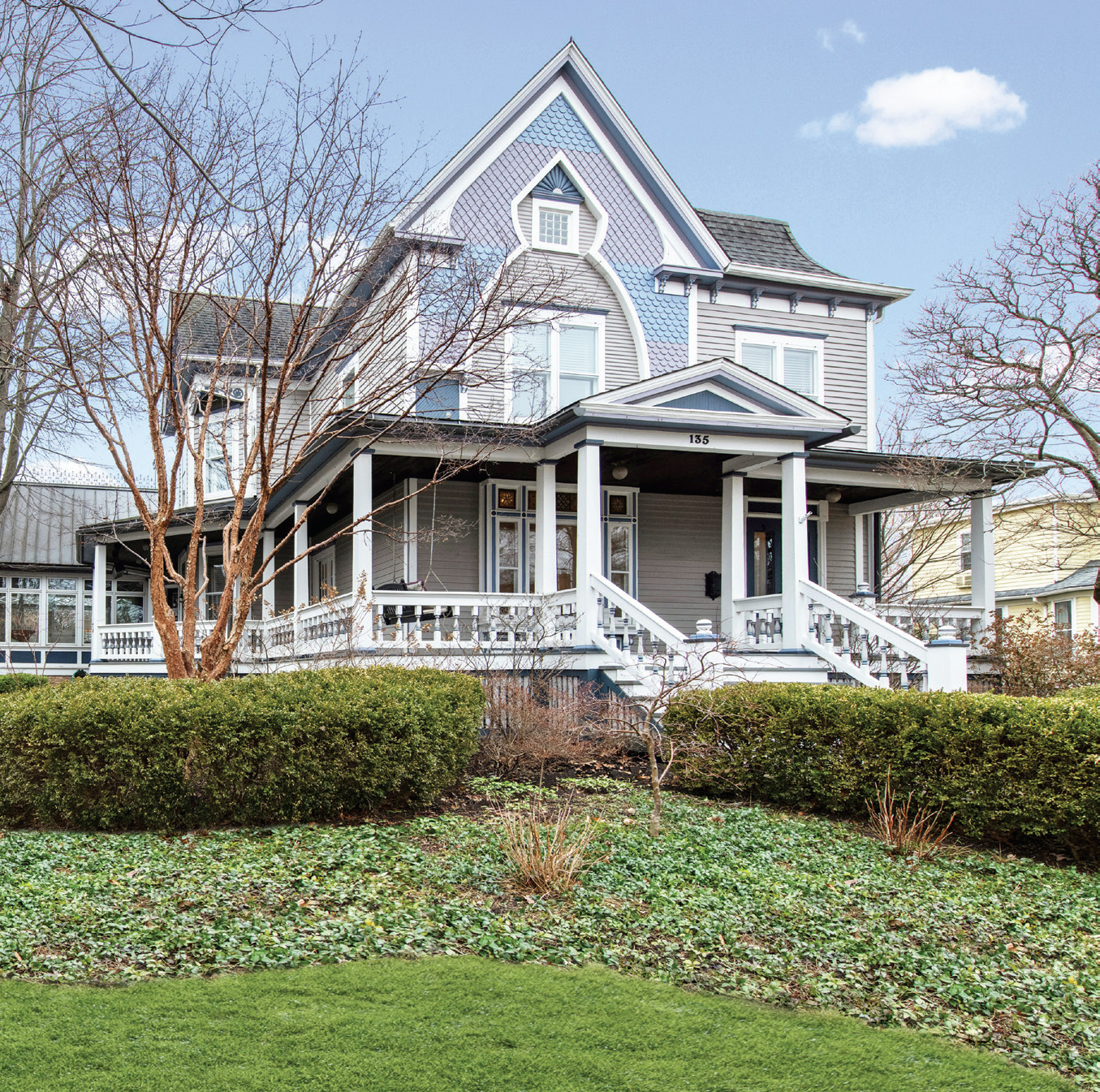
Some homes tell you when they were built. Others tell you why a place exists in the first place. The home at 135 West Lake Street belongs to the latter.
Set along one of Barrington’s most time-honored streets, the home traces back to a period when the village was just beginning to take shape as a railroad-connected community in the late 19th century. Built in 1893, it reflects the Queen Anne tradition that came to define American residential architecture during that era—expressive, detailed, and built with a level of craftsmanship that was meant to endure.
Lake Street became home to many of Barrington’s early residents whose livelihoods were tied to that growth (see sidebar next page). The result is a street where architecture and history are aligned, where homes were not only built well, but built with a clear relationship to their surroundings. The home at 135 lives within that pattern.
The house faces forward; its porch and façade oriented toward the street in a way that connects it to the daily rhythm of the neighborhood. It’s a small detail, but it reflects how these homes were intended to function—not as private retreats set apart, but as part of a shared streetscape that encourages people to know their neighbors.
The lot is wider than most, an uncommon dimension this close to downtown. That allows the property to retain a sense of space behind the structure, where secondary buildings and outdoor areas play a meaningful role as an enclave for privacy.
Here, that includes a coach house with space for entertaining, detached garage, swimming pool, and outdoor living spaces—elements that point back to an earlier model of residential design, when a home was conceived as a complete property, rather than a single footprint.
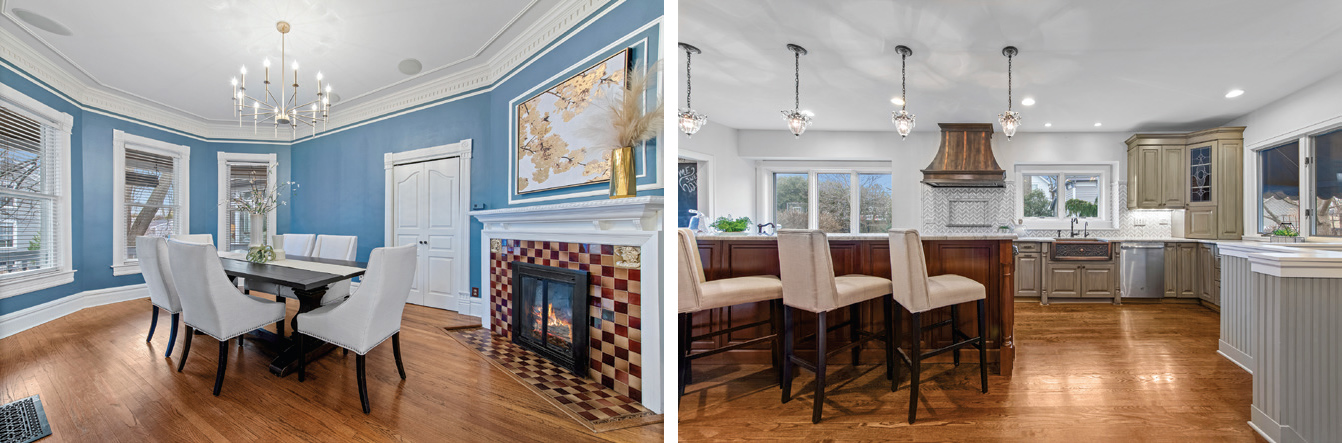
Inside, the architectural character remains. Stained glass, detailed millwork, parquet flooring, and ornamental plasterwork speak to the craftsmanship of the period, now fully modernized while keeping the aesthetic of its original period design. The balance is measured rather than dramatic: preservation without excess, adaptation without erasure.
What distinguishes 135 West Lake Street is not a single feature, but how consistently it reflects the original logic of the street. The proportions, the placement, and the way the home engages with its surroundings remain intact. That is often what people mean, even if they don’t say it directly, when they describe something as quintessential Barrington.
Not just that it’s old, or well preserved, but it serves as it was meant to.
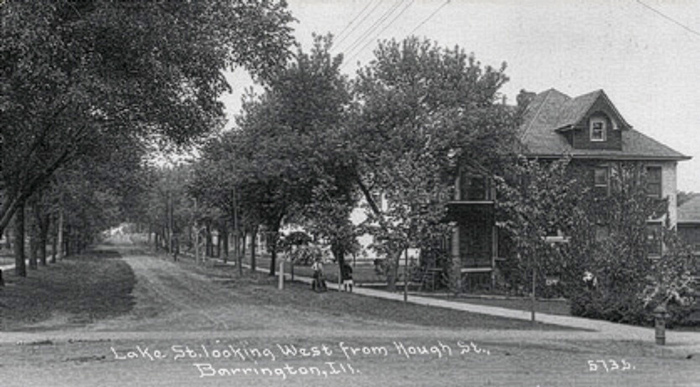
What is now West Lake Street was once part of a farm pasture owned by Milius “M.B.” McIntosh, Barrington’s first elected village president. McIntosh parceled and sold that land which would become one of the village’s most established residential corridors.
McIntosh played a central role in Barrington’s early civic and commercial life, serving in public office while also operating a lumberyard, bank, and other local enterprises that supported the town’s growth.
Through family connections, builder and architect Fred Lines, who lived at 130 West Lake Street, emerged as an early master builder of the area’s residential character, designing homes for his family and prominent residents, including the John Robertsons, whose Victorian residence is now Barrington’s White House.
West Lake Street also drew Sanford Peck, an enterprising real estate man based in Chicago’s Railway Exchange Building. Peck’s city access enabled him to introduce the Barrington countryside to a group of pioneering industry magnates who bought the old farms and built them into beautiful estates and hobby farms, now Barrington Hills. Peck is credited with building the home at 135 West Lake Street where he lived and then his daughter lived for a span of about 83 years, until 1976. Some of his descendants still live in Barrington.
Share this Story