
Celebrating 21 Years as Barrington’s Signature Magazine
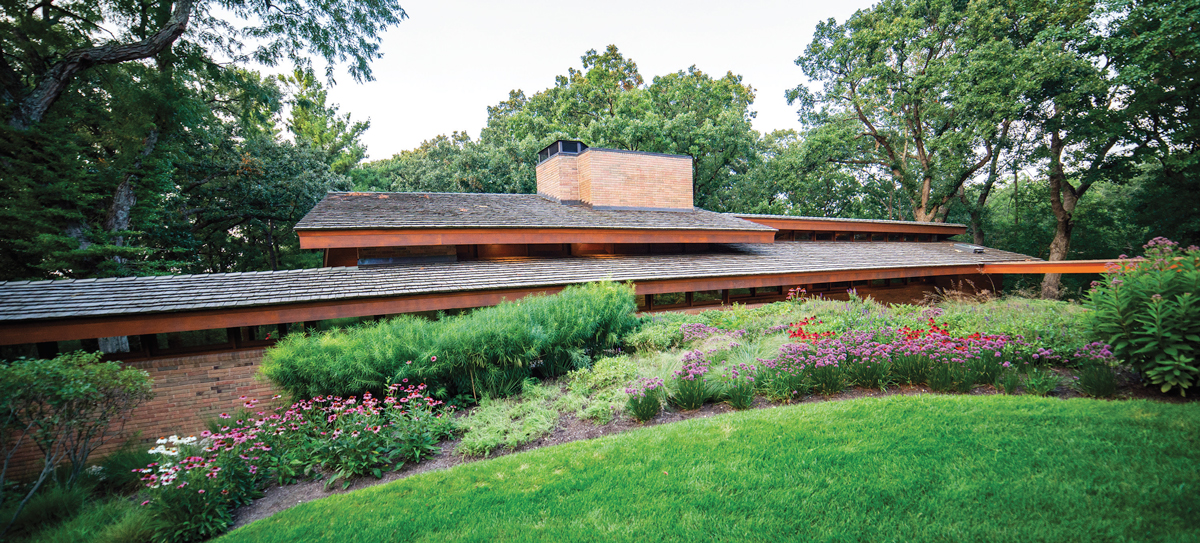
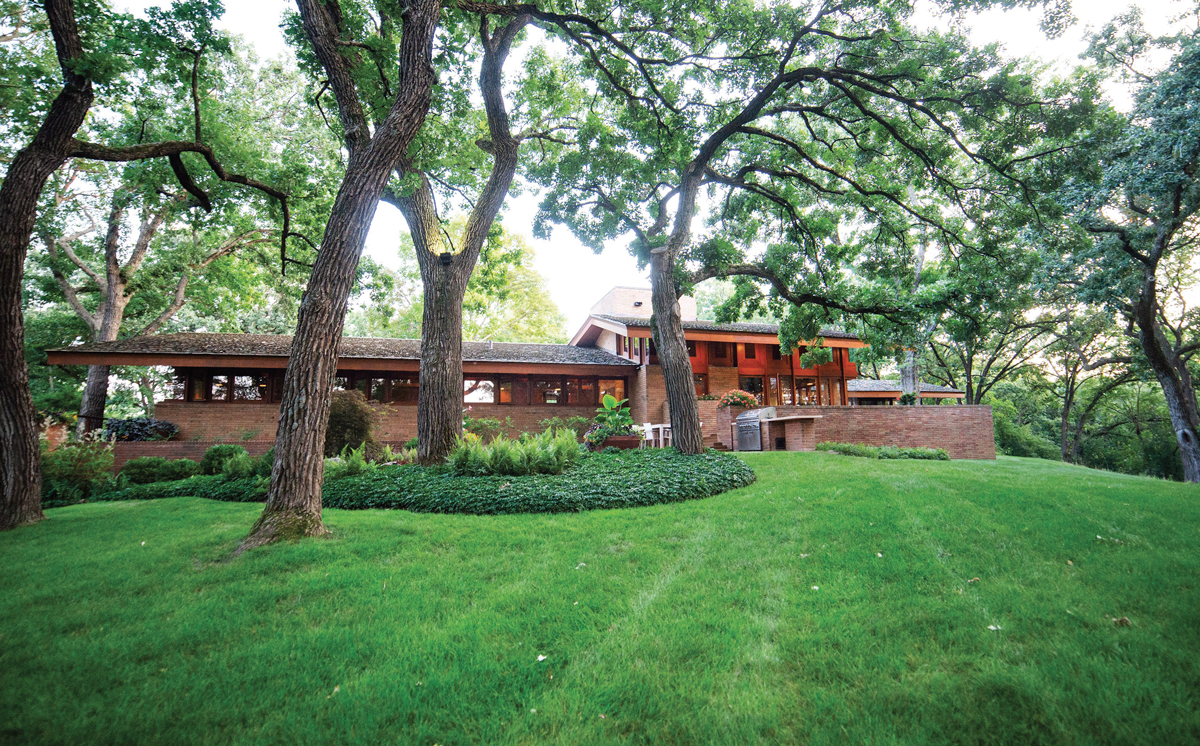
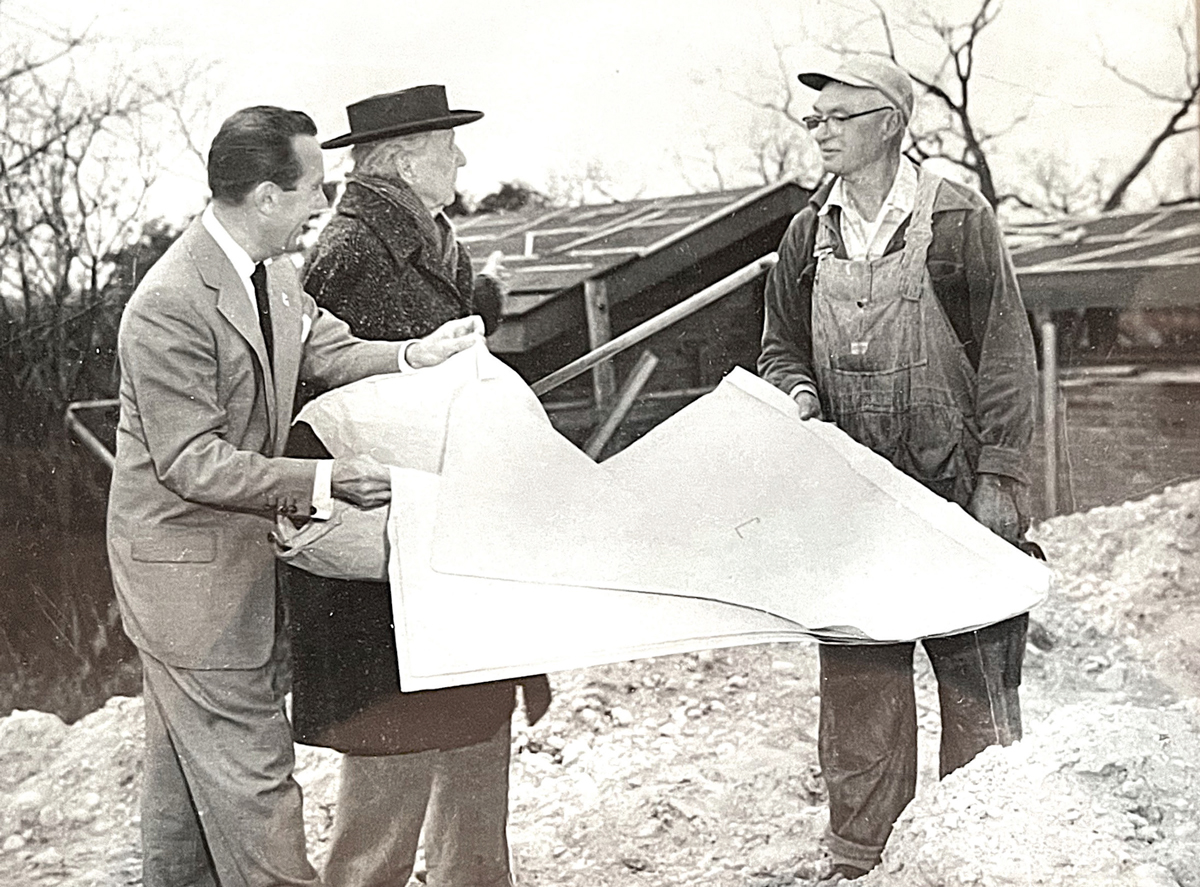
Barrington Hills is home to one of Frank Lloyd Wright’s final privately-owned home commissions before his death in April 1959, and likely the only site there he visited in person. Affluent interior designer Louis B. Fredrick owned a 10-acre property west of the Village of Barrington for which Wright was hired. There was tension, as Fredrick rejected the first two house designs by Wright. Then America’s foremost architect was dropped, another architect hired, and then Wright was brought back to design and build the house, named after its first owner.
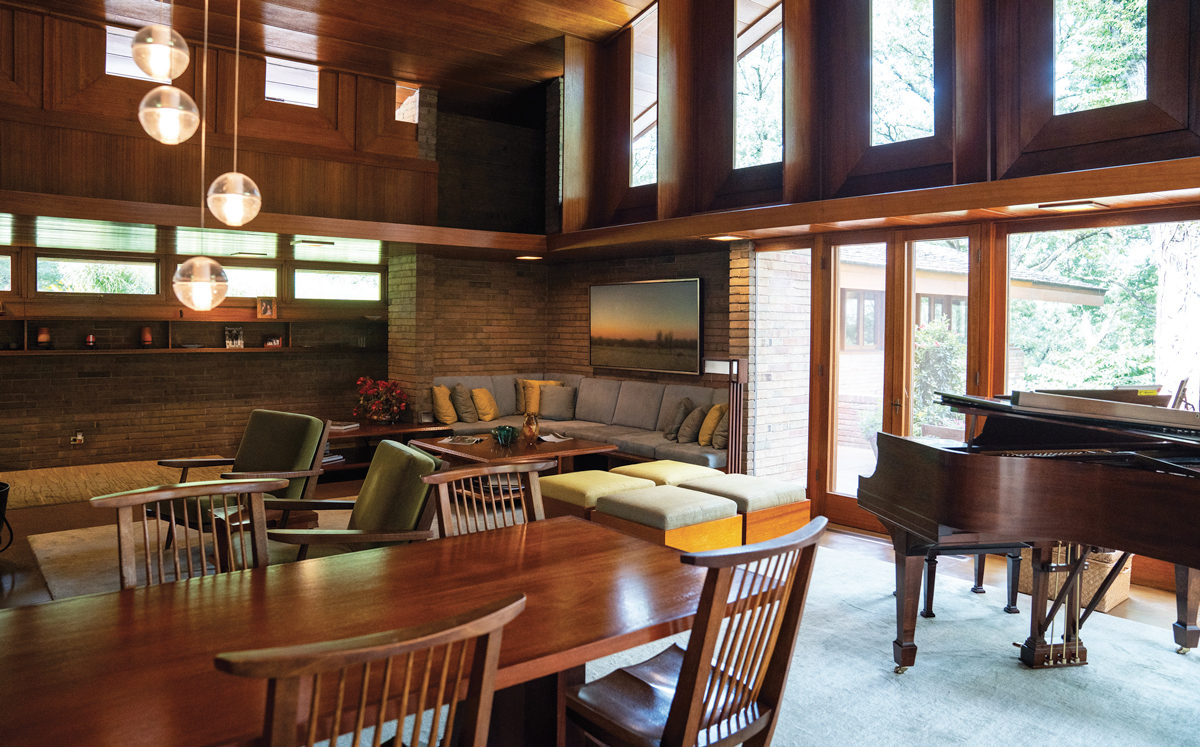
Wright’s organic approach to architectural design shifted to Usonian after his Prairie style and Japanese influences. Usonian principles feature integration into the land, use of natural materials, strong horizontal lines, and long bands of windows to capture changing light. His genius was the ability to study geological contours, vegetation, light, wind, and other elements and perfectly place the building so that it appears to grow from the site, rather than sit upon it.
The Fredrick House completion in 1957 is synonymous with the formation of the Village of Barrington Hills, which happened the same year. Both efforts recognize the importance of preserving natural settings and a reverence for the outdoors. Forward-thinking residents forming the 29-sq. mile Village of Barrington Hills incorporated with zoning that preserved open space and offered room for their equestrian and outdoor sporting lifestyles as the post-war rush to develop suburbs was underway.
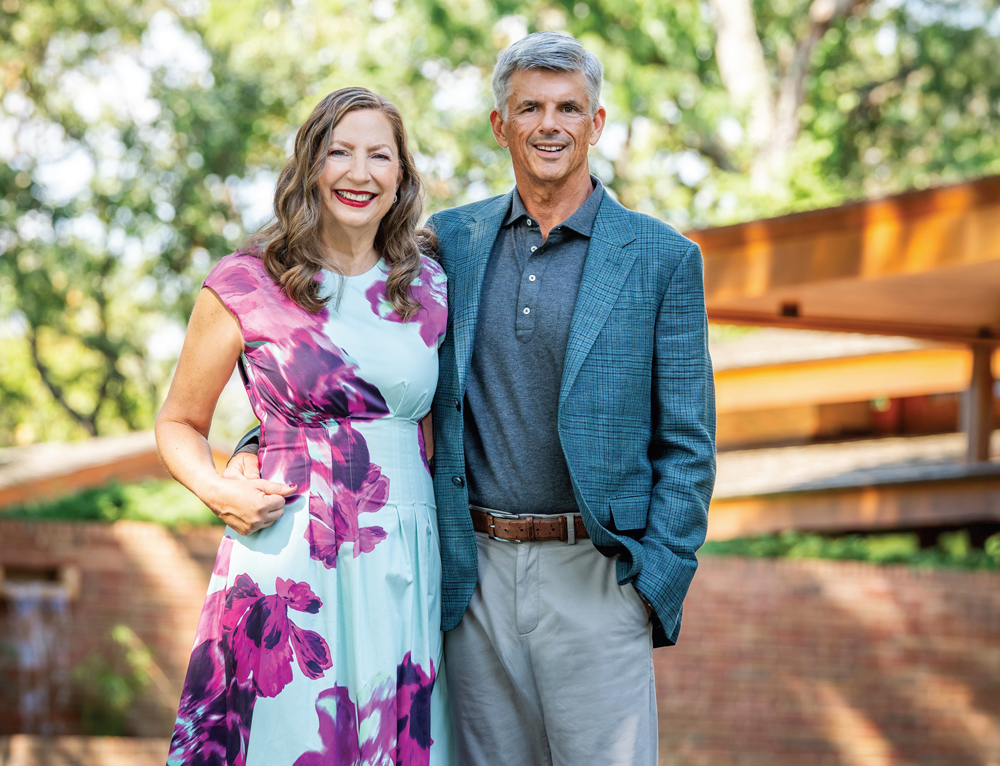
Joyce and David McArdle met one summer while he was painting walls at his father’s Pheasant Run Resort. David grew up watching his father Edward’s vision prosper as the iconic destination in their hometown of St. Charles, Illinois. Joyce was a young teenager visiting the resort from Northwest Chicago. The rest is a family history of envisioning, developing, and preserving properties—both commercial, residential, and of note, Frank Lloyd Wright’s houses.
While dating, the couple often visited Frank Lloyd Wright houses in Oak Park and River Forest. Once married and ready to start a family, they learned that the 1901 Frank (F.B.) Henderson House was for sale in Elmhurst. Both being attorneys working for their property development firm, the two got to work restoring the home while there, from 1988 to 1994.
“In 1994, we commissioned E. Fay Jones to design and build a home for us. [Jones was a Wright protégé.] Since Fay did not design too many homes, we flew out to meet him in Arkansas. He was intrigued by the fact that we wanted to design and build a home with him after we lived in a Wright home. The home in Barrington Hills took two years to build, and we lived there for 20 years,” David said. Daughters Abigail and Amelia were raised there. The equestrian lifestyle influence evolved to developing Old Barrington Estates and successful equestrian professions for both women, who spend time in Wellington, Florida.
As happens, Abigail and Amelia grew up, and their parents started thinking about downsizing. A real estate colleague informed them that there was a Wright home in Barrington Hills for sale. There were rumors the building might be torn down, having sat unattended for some time, and as lovers of architecture, the McArdles made the purchase. Their devoted restoration honors the original architecture with a few updates, including a Japanese style tearoom.
“Living in a work of art affects how you see and feel details on a daily level,” David said. The couple notices the way Wright played with the light, and it makes them look deeper at the patterns and rhythms in life. They are more aware when things around them are out of sync.
What would Joyce say to Wright if she could? “I’d say ‘thank you.’ That it is amazing to spend time in your creation and as a mother, to know my children have grown up living in a work of art, learning from it,” Joyce said.
Both say that they are grateful to have been able to save and restore this property to its original glory, when many Wright homes become museums or are lost. It is difficult to imagine another private couple who have inhabited so much of Wright’s legacy firsthand. They may be of the rarest architectural dwellers.
Share this Story